Alinea

Provinces

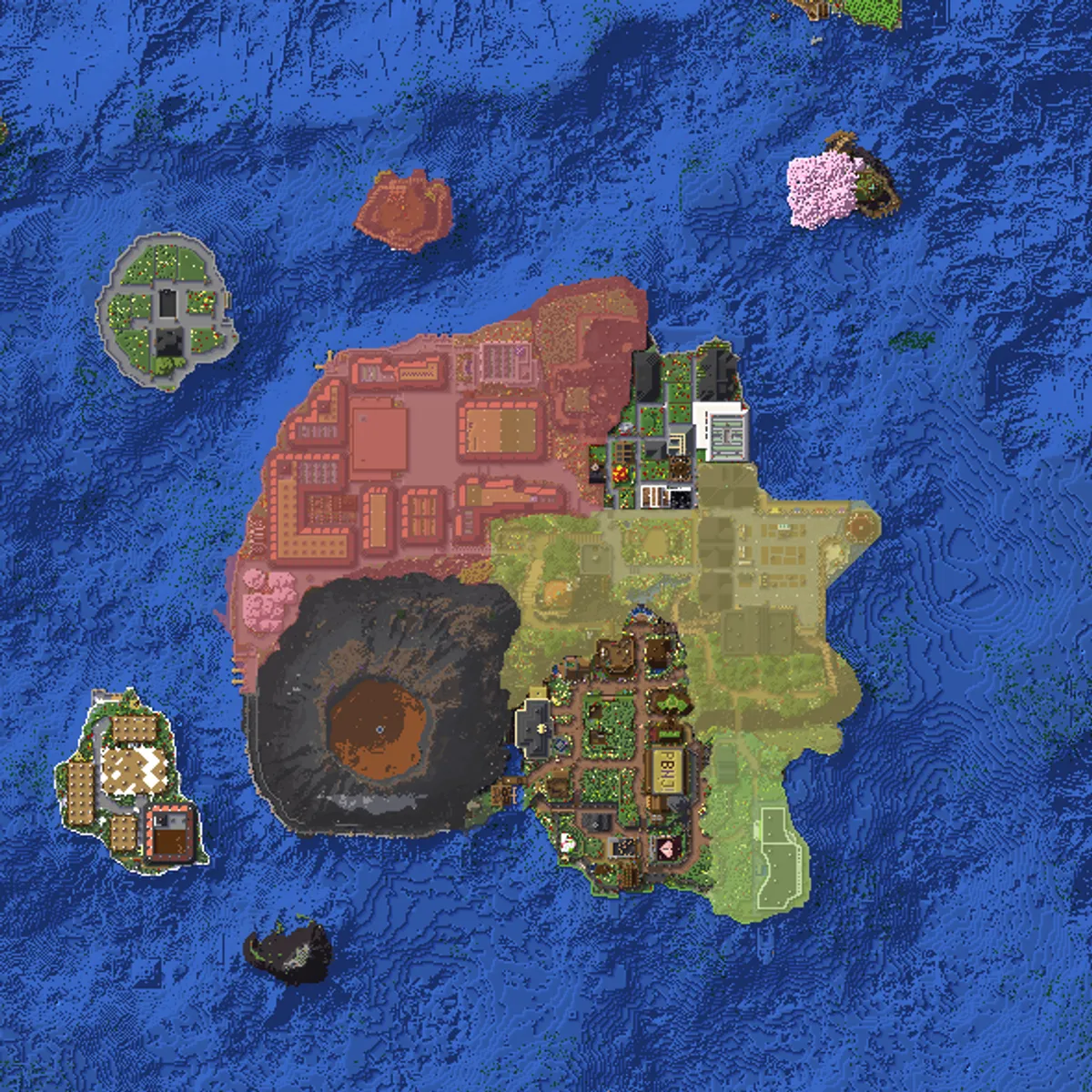
Alinea is split into three types of regions: provinces, administered by players; crown land, administered by staff; and territories, which are unadministered. The rest of this page focuses on provinces.

Why provinces?

By splitting the server up into provinces, we obtain two main benefits:

  • Different groups prefer different rules, building styles, and ways of managing land. Provinces let like-minded players organise their own space.
  • Space is limited. Players earn landscrips based on activity, and provinces must pay landscrips to hold land. This allows active communities to sustain a larger area without unused land being held indefinitely.

This also creates a competitive dynamic: provinces are continuously competing to improve their organisation and especially their tax efficiency, to attract citizens and afford their land.

How are provinces organised?

Every province is led by a single ruler. This ruler represents the province to the server administration and is accountable for ensuring the province abides by server rules.

How the province is run beyond that is entirely up to the ruler. Rulers can govern alone, appoint deputies, form councils, or even hold elections. Provinces can be highly centralised, fully communal, or anything in between.

Taxes

Every province must pay a weekly provincial tax to the Crown. This payment is what allows the province to continue existing. If the tax cannot be paid, the province risks fines, replacement of the ruler, or full disbandment. Because of this, securing a stable income stream is one of the province’s core responsibilities: without steady funding, it cannot survive.

The provincial tax is paid in either cc/gc or landscrips.

The server administration will keep provincial rulers updated on their provincial taxes and how to pay them. Tax rates can change without prior warning and fluctuate quite widely, so provinces are advised to keep a buffer of funds to deal with sudden increases.

Local taxes

One way provinces can build these income streams is by levying local taxes on their members.

“Member” is a broad term here: a province does not need to use that exact word, or any word at all. What matters is that there is a clear, mutual understanding that a player holds a defined status in the province, and that this status comes with specific taxes that were clearly communicated beforehand. Provinces may define fixed billing periods for local taxes, for example weekly.

If the province ends the relationship, the player is not liable for any taxes that would only become due after the relationship ended. If the player ends the relationship, the province may still charge any local taxes that become due at the next scheduled billing moment, but only under the terms that were in effect while the relationship existed.

A province may change the taxes it levies, including with immediate effect. When a tax is increased, any affected player must be able to immediately end the relationship that makes them subject to that tax once they are notified of the change. Ending the relationship prevents the increased part from applying at any future billing moment, but does not cancel taxes that are already due or that become due at the next scheduled billing moment under the old terms. Whenever a province changes its taxes, it must clearly state how a player can end their membership or equivalent status.

Provincial authority

Provinces have the right to regulate what happens within their borders. A ruler may set local rules on three main areas: who may enter or be present in the province, how land and buildings are used, and how players are expected to behave while in the province.

In practice, this can include rules about who is allowed to enter or stay in certain areas, what building styles, themes, or materials are permitted, who may use provincial infrastructure or shared resources, and what forms of PvP or other conduct are allowed or banned. Local rules must be written down and easy to find. A rule can only be enforced if players had a fair chance to know it in advance.

Enforcement

Rulers are responsible for enforcing their provincial rules. They can do this in three main ways:

  • They can evict a player from any land or space they occupy.
  • They can issue fines to players who break clearly published provincial rules or fail to meet obligations under those rules.
  • They can escalate issues to the server administration when a situation cannot be resolved within the province or goes beyond provincial authority.

Evictions

When a player occupies land or space in a province, the province may evict them. Each province must publish a clear eviction notice period. A province that fails to do so will have an assumed notice period of 7 days. An eviction starts when the player is notified and only takes effect once the notice period has fully elapsed. Until then, the player retains access to the space for the purpose of removing their belongings.

If a province shortens its eviction notice period, the change applies gradually to existing land use. From the moment the change is announced, the minimum notice that must be given to current occupants decreases at a steady pace: for each day that passes after the announcement, the minimum required notice decreases by one day, until it reaches the new notice period. Any land use that begins after the announcement is immediately subject to the new notice period.

If land use is tied to taxes, those terms are fixed for the duration of the notice period. Provinces may not alter them for a player who is already in the process of being evicted.

Fines

Provinces may issue fines to enforce provincial rules that were clearly communicated in advance. Fine amounts must be established ahead of time, applied consistently, intended to discourage rule breaking or cover the costs of violations, must not be unreasonably high for the infraction, and may not exceed 0.50 gc.

Any fine must be issued with a written and signed book. This book must state:

  • the rule or infraction that was violated,
  • the date of the infraction,
  • the amount of the fine, and
  • that the player has the right to dispute the fine by contacting the server administration.

A copy of this book must be provided to the server administration within 7 days.

If a province has its own dispute or appeal mechanism, it may require players to use that first, provided this requirement is clearly communicated and does not prevent escalation to the server administration.

Want to Join?

Alinea is a whitelisted server. Join our Discord to apply and become part of our community!

Join Discord